
Read Our Blogs
Helpful blogs written by experts
Helpful blogs written by experts
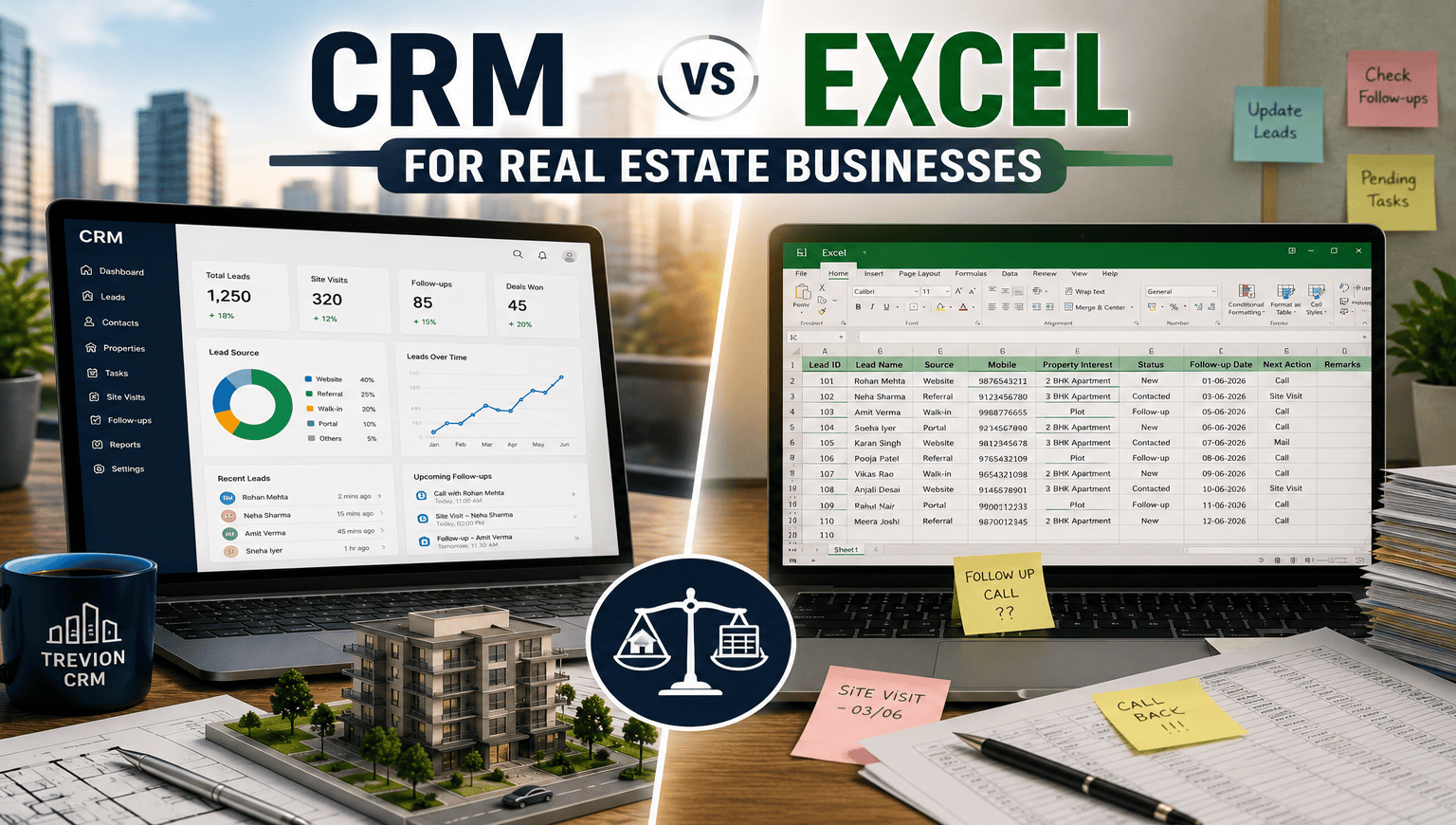
Many real estate businesses start by managing leads in Excel. It is easy to use, affordable, and available on almost every computer.
But as your business grows, so does the number of leads, follow-ups, and site visits. That's when Excel starts becoming difficult to manage, and many businesses begin looking for a CRM.
So, which one is the better choice? Let's compare them.
Excel is useful when you have a small number of leads and a limited sales team. You can create spreadsheets, record customer details, and track basic information.
However, everything has to be updated manually. As the data grows, finding information, tracking follow-ups, and sharing files with the team becomes more challenging.
A CRM is designed to manage your complete sales process. Instead of using multiple spreadsheets, it keeps all customer information, follow-up history, site visits, and sales activities in one place.
A dedicated Real Estate CRM also helps automate repetitive tasks, ensuring no lead is forgotten and every customer receives timely follow-ups.
| Feature | Excel | CRM |
|---|---|---|
| Lead Management | Manual | Automated |
| Follow-up Tracking | Manual | Automatic Reminders |
| Team Collaboration | Limited | Easy |
| Customer History | Basic | Complete Timeline |
| Reports | Manual | Real-Time Reports |
| Site Visit Tracking | Difficult | Built-in |
| Scalability | Limited | Excellent |
Excel is a good option if:
Excel is suitable for small businesses with fewer leads. As the business grows, managing data manually becomes more difficult.
A CRM automates lead management, follow-ups, reporting, and customer tracking, helping sales teams work more efficiently.
You should consider switching when you're handling a large number of leads, working with a sales team, or missing follow-ups due to manual tracking.
For small operations, Excel can still do the job.
If your team is missing follow-ups, handling hundreds of leads, or struggling to organize customer information, it may be time to move beyond spreadsheets.
A CRM for Builders and Real Estate Developers makes it easier to assign leads, manage site visits, monitor sales performance, and keep every customer interaction organized.
As businesses grow, manual work often slows the sales process. A CRM helps reduce repetitive tasks and gives sales teams more time to focus on customers.
With features like lead tracking, reminders, reports, and centralized customer data, a CRM supports faster decision-making and better team coordination.

Excel is a great tool for getting started, but it has limitations as your business expands. A CRM provides better organization, improves follow-ups, and helps sales teams work more efficiently.
If your goal is to grow your real estate business and manage customers professionally, choosing the right CRM software can save time and improve your overall sales process.
Get all the latest tech updates!


