
Read Our Blogs
Helpful blogs written by experts
Helpful blogs written by experts
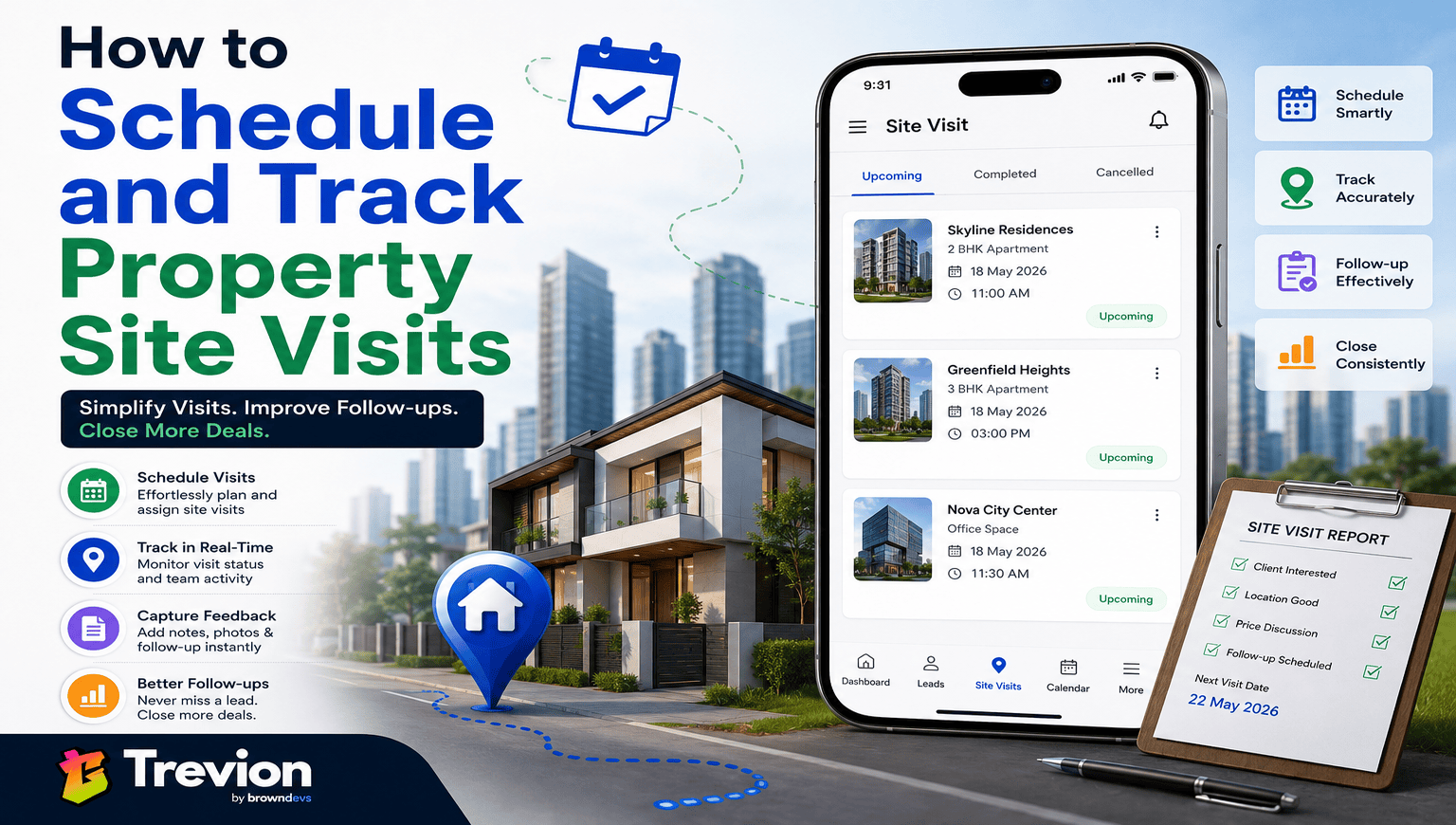
A property site visit is often the moment when a lead becomes a serious buyer.
Up until that point, conversations usually happen over phone calls, WhatsApp, or emails. But once a prospect agrees to visit a property, the chances of conversion increase significantly.
The problem is that many real estate businesses still manage site visits through phone calls, spreadsheets, or handwritten notes.
It works for a while.
But as enquiries increase, appointments start overlapping, follow-ups get delayed, and important customer details are forgotten.
A structured process can help avoid these problems.
In this guide, we'll walk through a practical way to schedule, manage, and track property site visits more efficiently.
A successful site visit isn't just about showing a property.
It involves several steps:
If even one of these steps is missed, there's a higher chance of losing the opportunity.
Not every enquiry is ready for a site visit.
Before fixing an appointment, understand:
This helps your sales team spend more time with serious buyers.
Avoid scheduling visits through memory alone.
Every appointment should include:
Using a shared calendar prevents double bookings and keeps everyone informed.
People forget appointments.
A reminder sent one day before and another a few hours before the visit can reduce cancellations.
Many businesses now use WhatsApp or SMS reminders to confirm appointments automatically.
The visit doesn't end when the customer leaves.
After every visit, record:
Without these notes, sales teams often repeat conversations or miss buying signals.

The first 24 hours after a site visit are extremely important.
This is when customers are still comparing options and discussing the property with family members.
A quick follow-up helps answer pending questions and keeps your project fresh in the buyer's mind.
Businesses using Real Estate Lead Management Software often find it easier to schedule follow-ups and track every customer interaction from a single dashboard.
Many deals are lost because of avoidable mistakes.
Some of the most common ones include:
Having a clear process helps eliminate these issues.
As your business grows, manually managing dozens of site visits every week becomes difficult.
A CRM helps by allowing teams to:
Instead of switching between spreadsheets, calendars, and WhatsApp chats, everything stays organized in one place.
**
 **
**
Businesses looking for a CRM for Property Dealers often choose platforms that include site visit management alongside lead tracking and sales automation.
A successful site visit isn't just about showing a property—it's about delivering a smooth customer experience from the first enquiry to the final decision.
By qualifying leads, scheduling appointments properly, recording customer feedback, and following up on time, real estate teams can improve both productivity and conversion rates.
As your business grows, using the right systems to manage site visits becomes just as important as generating new leads.
Tracking site visits helps sales teams monitor customer interest, record feedback, schedule follow-ups, and improve conversion rates.
You should record customer feedback, preferred properties, objections, next steps, follow-up date, and any special requirements.
Yes. Many real estate CRM platforms allow businesses to schedule appointments, assign sales executives, record visit details, and automate follow-up reminders.
Ideally, within 24 hours. Prompt follow-ups help maintain customer interest and address any questions before the buyer moves on to other options.
Get all the latest tech updates!


