
Read Our Blogs
Helpful blogs written by experts
Helpful blogs written by experts
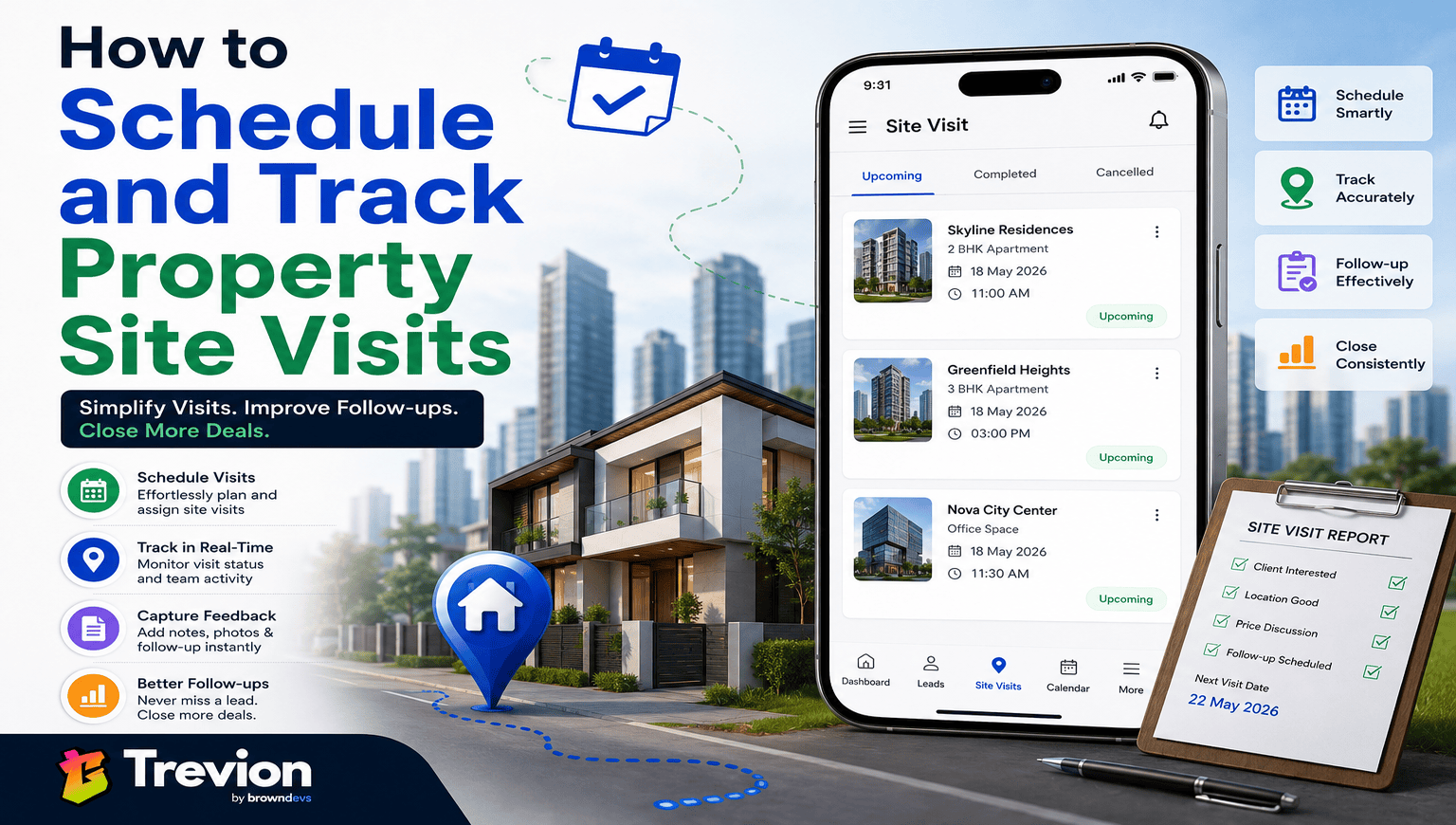
Every real estate salesperson has experienced this.
A lead comes in from Facebook or MagicBricks.
After a few calls, the customer finally agrees to visit the property.
The site visit goes really well.
They ask about possession.
They ask about payment plans.
They even say,
"The project looks good. We'll get back to you after discussing it at home."
Your sales executive comes back feeling confident.
Three days later...
Nothing.
No calls.
No WhatsApp reply.
No booking.
The frustrating part?
Most people think the customer wasn't interested.
But that's usually not the real reason.
In many cases, the deal is lost because the sales process breaks down after the site visit—not during it.
Let's look at where things usually go wrong.
Think about your own buying decisions.
Would you buy a house after seeing just one project?
Probably not.
Most buyers visit multiple properties before making up their mind.
They're comparing prices.
Talking to family members.
Checking loan options.
Watching YouTube reviews.
Reading Google reviews.
While they're doing all this, they're also talking to other builders.
If your team disappears after the site visit, someone else will continue the conversation.
And in real estate, the person who stays connected often wins the deal.
It's Poor Follow-up.
Many sales teams believe they've already done enough.
"We've shown the property. Now it's the customer's turn."
Unfortunately, that's not how buyers think.
Sometimes they genuinely want to buy.
They just need another conversation.
Maybe they forgot to ask about parking.
Maybe they want a different floor.
Maybe they're waiting for salary credit before paying the booking amount.
If nobody calls them back, the excitement slowly disappears.
Here's something you'll notice if you spend time with high-performing sales teams.
After every site visit, they don't just mark the lead as Visited.
They write down everything.
It sounds simple.
But these small details completely change the next conversation.
Imagine calling a buyer and saying,
"Last time you mentioned that your wife preferred a park-facing apartment. We've just received availability for one."
That feels personal.
The customer instantly knows you were actually listening.
**
 **
**
Now imagine one salesperson handling 80 or 100 active leads.
Can they remember every conversation?
Of course not.
That's why successful teams rely on a process.
Not memory.
Every lead has:
Instead of asking,
"Whose lead was this?"
Everyone already knows.
Many agencies invest in the Best CRM for Real Estate Agents in India because it helps the entire team stay on the same page instead of depending on individual memory.
Something interesting.
Sales executives stop chasing every lead randomly.
Instead, they know exactly:
This makes conversations more relevant.
Customers don't feel like they're being "sold."
They feel like someone actually remembers where they left off.
That's one of the reasons many growing businesses start using Real Estate Lead Management Software as their enquiry volume increases.
Whenever bookings slow down, many companies immediately increase their advertising budget.
More Facebook Ads.
More Google Ads.
More portal listings.
But here's the uncomfortable question.
Are you converting the leads you already have?
If 100 people visit your property every month and only a handful book, generating another 100 leads may not solve the real problem.
Improving your site visit process often has a much bigger impact than increasing your marketing spend.
They stay organised.
That's it.
They don't necessarily have better projects.
They don't always spend more on advertising.
They simply make sure that every enquiry moves to the next stage without getting forgotten.
As more leads start coming in, many agencies adopt a CRM for Property Dealers to manage enquiries, assign follow-ups, track site visits, and keep customer conversations in one place.
A successful site visit doesn't guarantee a booking.
What happens after the customer leaves often matters even more.
The sales teams that consistently close more deals aren't lucky.
They're organised.
They know what the customer asked.
They know when to call.
And they never let a promising lead disappear simply because someone forgot to follow up.
That's the real difference between a busy sales team and a successful one.
Most buyers continue comparing projects after a visit. Without timely and relevant follow-ups, interest can fade or shift to another developer.
The first follow-up should ideally happen within 24 hours while the visit is still fresh in the buyer's mind.
A CRM can't make a customer buy, but it helps sales teams stay organised, remember customer preferences, schedule follow-ups, and reduce missed opportunities.
Yes. Recording customer preferences, objections, and next actions makes future conversations much more relevant and improves the chances of conversion.
Get all the latest tech updates!


